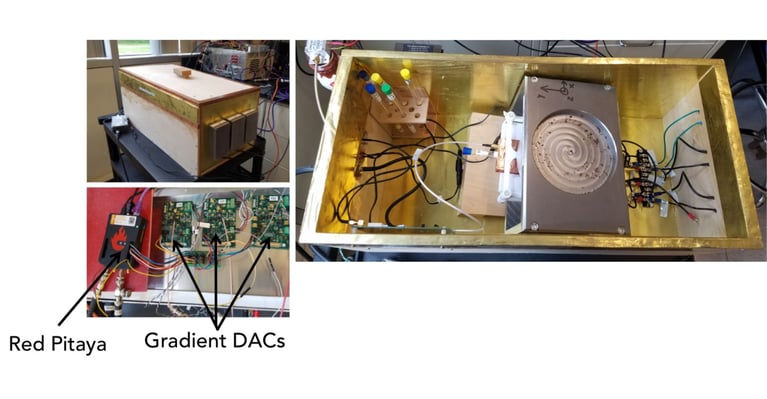
From spotless lab results to rugged field deployments, scaling precision methane detection isn’t just physics — it’s engineering. In his AllThingsOpen article, CTO Črt Valentinčič shows how open source FPGA hardware, specifically the Red Pitaya STEMlab 125‑14 PRO Gen 2, enabled LongPath Technologies to take Nobel Prize‑level dual‑frequency comb laser spectroscopy out of the lab and into hundreds of remote industrial monitoring sites.
By providing full FPGA source code access, layered APIs, and robust integration of high‑speed data acquisition, real‑time signal processing, and edge‑ready operation, open source FPGA solved critical challenges: real‑time Fourier transforms at the edge, maintaining analog precision in harsh environments, and seamless system integration without vendor lock‑in.
For anyone working with FPGA instrumentation, precision spectroscopy, or industrial sensor systems, this case highlights how openness, flexibility, and community‑driven engineering can dramatically improve scalability and reduce cost.
Read the full article here.
About the Red Pitaya Team
The Red Pitaya Technical Editorial Team is a cross-functional group of technical communicators and product specialists. By synthesizing insights from our hardware developers and global research partners, we provide verified, high-value content that bridges the gap between open-source innovation and industrial-grade precision.
Our mission is to make advanced instrumentation accessible to engineers, researchers, and educators worldwide.


 September 22, 2026
 September 17, 2026