


Modern particle accelerators generate enormous amounts of measurement data that must be acquired, synchronized, processed, and analyzed with extremely low latency. Whether monitoring beam stability, controlling pulsed magnets, or performing high-voltage measurements, engineers increasingly need flexible instrumentation that can be customized without designing hardware from scratch.
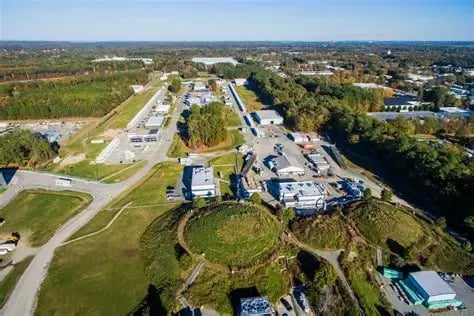
At the recent Real Time Conference, engineers from Jefferson Lab (JLab) presented their latest work on distributed real-time data acquisition and stream processing for nuclear physics experiments. Their architecture demonstrates how modern FPGA-based instrumentation can support large-scale scientific facilities by combining high-speed data acquisition with real-time processing across geographically distributed computing resources.
Among the technologies used throughout these developments is the Red Pitaya STEMlab, which has become part of several instrumentation projects at Jefferson Lab.
The Challenge: Flexible Instrumentation for Accelerator Facilities
Large accelerator facilities rarely rely on off-the-shelf instruments alone.
Instead, engineers often need custom measurement systems capable of:
- acquiring high-speed signals,
- performing deterministic real-time processing,
- integrating with existing control infrastructure,
- operating reliably around the clock, and
- evolving as experiments change.
Traditional laboratory instruments can become expensive or difficult to customize for these highly specialized applications. FPGA-based platforms offer an alternative by allowing engineers to implement custom signal-processing algorithms directly in hardware while maintaining software flexibility.
From Pulsed Magnets to High-Voltage Stability Measurements
According to the Jefferson Lab engineering team, Red Pitaya has already been deployed across multiple accelerator instrumentation projects.
One application involves a network of 15 Red Pitaya systems used for pulsed magnet control. After identifying a kernel-related software issue that caused occasional system reboots, the team resolved the problem while confirming that the hardware itself continued to perform reliably in production.
Another project focuses on high-voltage stability measurements, where the measurement architecture has proven successful enough that additional laboratories are now adopting the same approach.
The team is also preparing to present another Red Pitaya-based system for RF pulse stability measurements at the upcoming Low-Level RF (LLRF) conference.
These deployments illustrate an important trend: once an FPGA platform becomes part of a laboratory's instrumentation ecosystem, it can often be reused across multiple measurement applications.
Real-Time Data Processing at Scale
The conference poster highlights an even broader development.
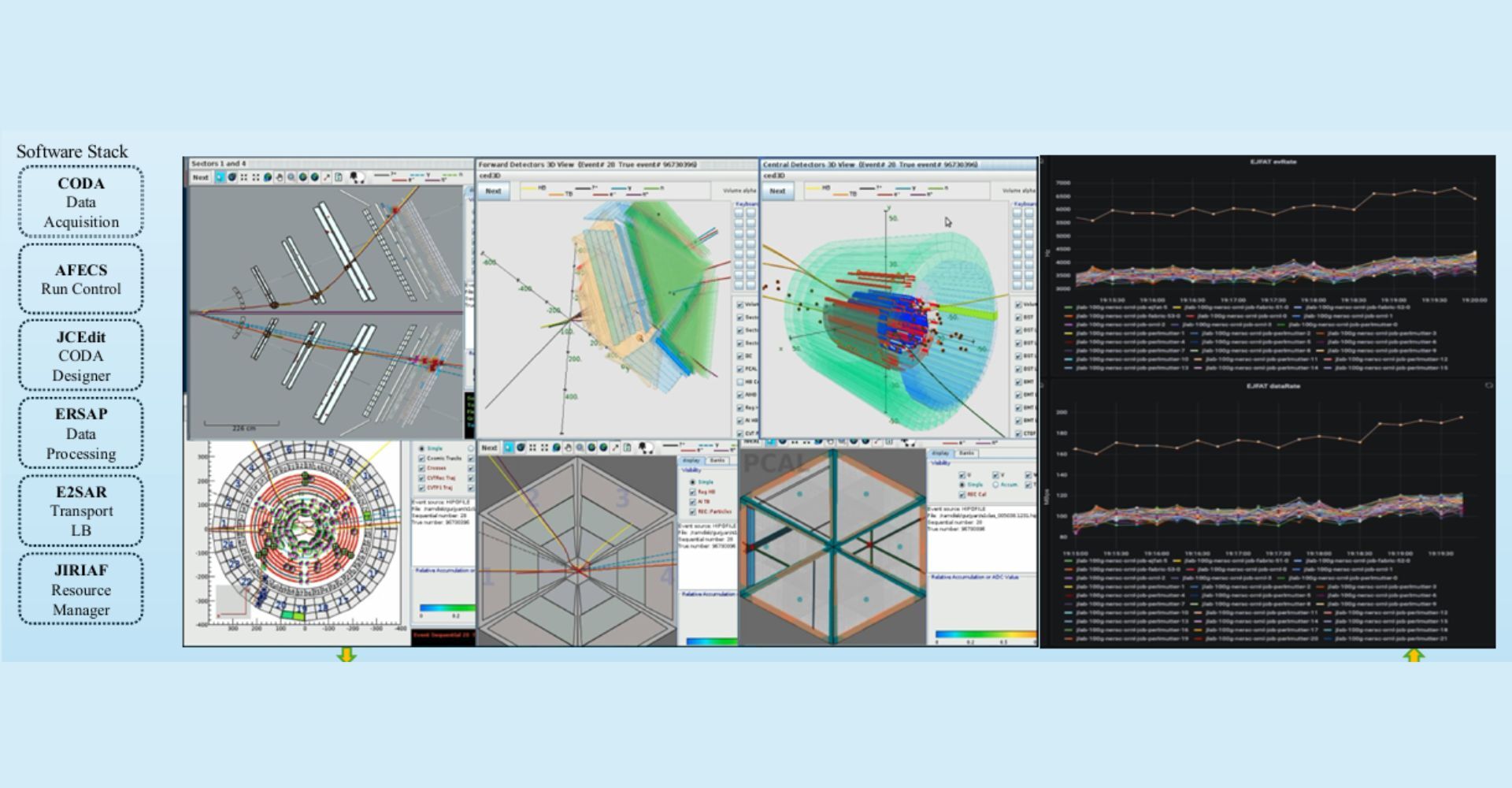
Researchers demonstrated a distributed data-stream processing workflow capable of transferring production physics data between multiple U.S. Department of Energy computing facilities while sustaining data rates of 100 Gbps. The architecture performed real-time processing across geographically distributed resources, representing an important milestone for future large-scale scientific experiments.
The presented software pipeline combines data acquisition, streaming, load balancing, event reconstruction, calibration, and online processing into a unified architecture that can operate across local and remote computing environments.
Although Red Pitaya is only one component within this larger instrumentation ecosystem, the project demonstrates the type of environments where compact FPGA platforms increasingly contribute to custom scientific measurement systems.
Why Engineers Choose FPGA-Based Platforms
For research laboratories, accelerator facilities, and scientific instrumentation teams, FPGA-based platforms offer several practical advantages over fixed-function instruments.
They enable engineers to prototype new measurement concepts quickly, implement application-specific processing directly in hardware, integrate with existing software environments, and scale systems as projects evolve.
Rather than treating measurement hardware as a closed instrument, engineers can build systems tailored to their own workflows while retaining the flexibility to modify algorithms, interfaces, and processing pipelines throughout the project lifecycle.
Red Pitaya in Scientific Instrumentation
Jefferson Lab's projects demonstrate how programmable FPGA platforms can support demanding scientific applications beyond conventional laboratory measurements.
From accelerator diagnostics and pulsed magnet control to high-voltage stability measurements and future RF instrumentation, flexible FPGA hardware continues to help research teams shorten development cycles while enabling highly customized measurement solutions.
As scientific facilities generate larger data volumes and demand increasingly sophisticated real-time processing, open and programmable instrumentation is becoming an essential part of modern experimental infrastructure.
Learn More
The work was presented at the Real Time Conference in the poster: Data Acquisition and Data Stream Processing for NP Research
Authors: Vardan Gyurjyan, D. Abbott, I. Baldin, M. Goodrich, D. Howard, Y. Kumar, D. Lawrence, B. Raydo, and S. Sheldon
Recent Posts
-
-
 September 22, 2026
 -
 September 17, 2026