A test and measurement setup can quickly become a collection of separate instruments: an oscilloscope, signal generator, spectrum analyzer, and other hardware, each designed for a specific task.
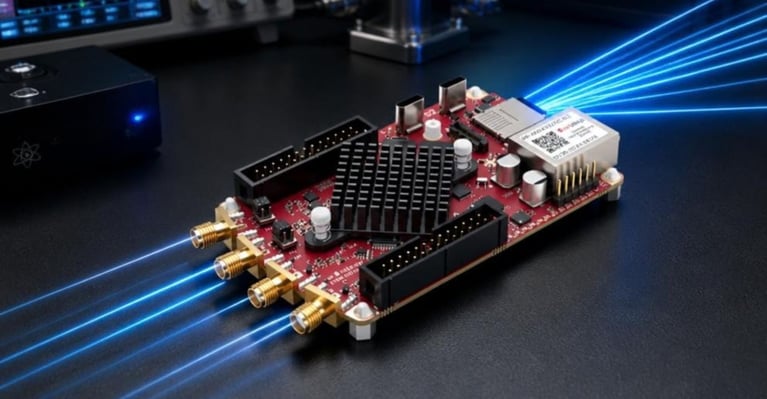
The Red Pitaya STEMlab Gen 2 platform takes a different approach. It combines signal acquisition, signal generation, processing, and programmable FPGA capabilities into a single platform that can be adapted to the application.
But having flexible hardware is only part of the equation. The challenge is knowing how to use it, modify it, and build something beyond the applications available out of the box.
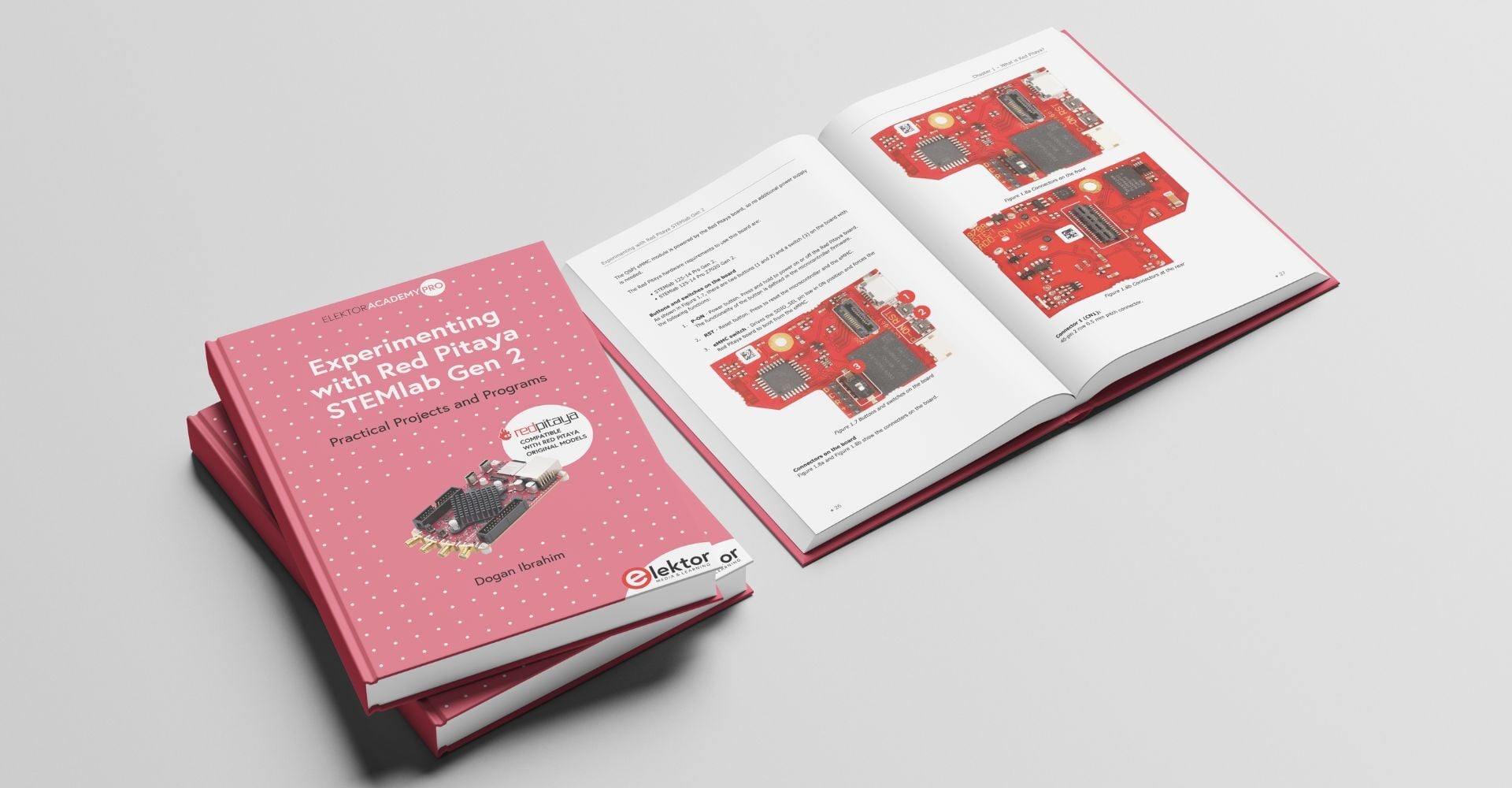
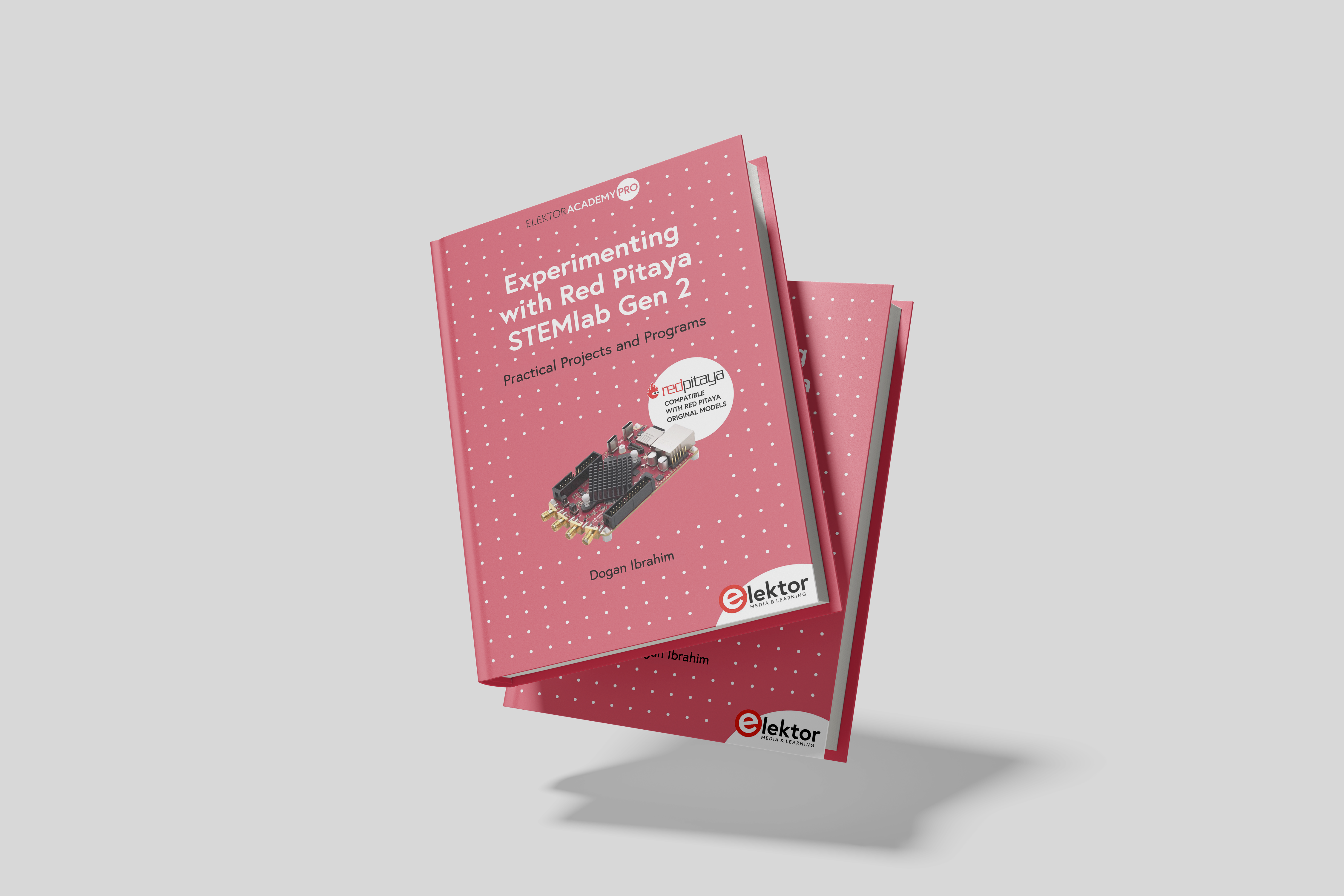
That is the focus of Experimenting with Red Pitaya STEMlab Gen 2, the new hands-on book developed in collaboration with Elektor.
Rather than treating Red Pitaya as a fixed instrument, the book explores what happens when you start experimenting with the platform itself.
From First Experiments to Custom FPGA Projects
The book takes a practical, step-by-step approach to working with Red Pitaya hardware and software.
It starts with the fundamentals of the platform, including its architecture and hardware design, before moving into electronic experiments for measurement, monitoring, and testing.
From there, the projects become progressively more advanced.
Readers explore how to use Red Pitaya with Python, develop electronic projects for measurement and testing, and work with the FPGA for real-time signal processing. The book also introduces FPGA development using Verilog HDL and the Vivado IDE, showing how projects can be developed on a PC and then transferred to the Red Pitaya for execution and testing.
The goal is not simply to explain the technology. It is to bridge the gap between understanding the platform and actually using it to build something.
What You Will Learn
Inside the book, readers will find practical guidance covering:
- Red Pitaya architecture and hardware design
- Electronic experiments for measurement and monitoring
- Python-based projects and programming workflows
- FPGA programming with Red Pitaya
- Verilog HDL development using the Vivado IDE
- FPGA-based real-time processing
- Electronic project design for measurement and testing
- Step-by-step examples that connect theory with practical implementation
The projects are designed to help readers move from basic experimentation toward more customized applications in measurement, signal analysis, monitoring, and control.
Explore the Platform, Not Just the Applications
One of the central ideas behind the book is that Red Pitaya is more than a collection of software-defined instruments.
At its core, the platform combines an ARM processor with FPGA fabric through its Zynq architecture. This combination gives developers the flexibility to use software for higher-level control while implementing time-critical processing directly on the FPGA.
That opens the door to building custom instruments and signal-processing workflows that are not limited to predefined applications.
The book introduces these capabilities through practical projects. Instead of approaching FPGA development as an isolated theoretical subject, readers can see how programmable hardware fits into a complete measurement or control system.
Python and Vivado are introduced in the same practical context: as tools for building, testing, modifying, and extending real applications.
Learn by Connecting, Measuring, and Modifying
The book follows a hands-on learning model.
Readers are encouraged to connect the hardware, run experiments, observe signals, modify parameters, and see the results directly. This makes the material relevant to anyone who wants to move beyond simulation and work with real-world signals and hardware.
The progression from measurement and monitoring experiments to FPGA programming also makes the book suitable for different levels of experience.
You do not need to begin as an FPGA expert to start experimenting with the platform. At the same time, readers with more experience can use the later material as a starting point for developing their own custom FPGA projects.
What Makes the STEMlab Gen 2 Platform Different?
The book also explores the capabilities introduced with the STEMlab Gen 2 platform, including improved performance, expanded I/O capabilities, enhanced FPGA features, and advanced connectivity options.
These capabilities are particularly relevant for applications that require more than standard bench instrumentation.
Depending on the project, the same platform can be used for precision measurement, signal analysis, real-time monitoring, or control. And because the hardware and software are programmable, the system can be adapted as the requirements evolve.
For engineers and developers, this flexibility can be particularly useful during prototyping, research, and custom system development, where fixed-function instruments may not provide the required level of control over the measurement or processing workflow.
From Theory to a Working System
The practical examples throughout the book are designed to connect technical concepts with implementation.
Rather than stopping at the question of how an FPGA works or how a signal can be processed, the projects show how those elements can become part of a functioning electronic system.
This makes the book relevant to readers working on applications such as:
- Custom test and measurement systems
- Signal analysis tools
- Real-time monitoring
- Embedded control systems
- FPGA-based signal processing
- Electronic experiments and prototyping
Whether the starting point is a custom circuit, a measurement problem, or the need for a real-time processing system, the book provides a structured path for exploring what can be built with the Red Pitaya platform.
A Book for Experimentation and Custom Development
Experimenting with Red Pitaya STEMlab Gen 2 is not intended as a manual for operating a single instrument.
It is designed to help readers understand how a modern software-defined test and measurement platform can be used, modified, and extended.
For beginners, it provides a practical introduction to working with Red Pitaya hardware, Python, measurement applications, and FPGA development.
For more experienced engineers and developers, it offers projects and examples that can serve as a foundation for custom instruments, signal-processing applications, and real-time embedded systems.
The underlying idea remains simple: start with the hardware, experiment with it, understand how it works, and then build something of your own.
Ready to Start Experimenting?
The book is designed to be used alongside the Red Pitaya STEMlab Gen 2 platform, allowing readers to move directly from the examples on the page to hands-on experimentation with real hardware.
Get the Red Pitaya STEMlab Gen 2 Starter Kit and start exploring the projects yourself.
FAQ
What is covered in Experimenting with Red Pitaya STEMlab Gen 2?
The book covers Red Pitaya architecture, hardware design, electronic measurement and monitoring experiments, Python projects, FPGA programming, Verilog HDL development with Vivado, and practical electronic projects for measurement and testing.
Does the book include FPGA programming?
Yes. The book introduces practical FPGA development with Red Pitaya, including projects using Verilog HDL and the Vivado IDE. It also explains how FPGA-based projects can be developed on a PC and transferred to the Red Pitaya for execution and testing.
Do I need previous FPGA experience?
No. The book progresses from more fundamental experiments toward advanced FPGA-based projects. Readers can begin with measurement, monitoring, and Python projects before exploring more advanced FPGA development.
Is the book useful for Python developers?
Yes. The book includes hands-on projects using Python as part of practical measurement, monitoring, and control workflows.
What can I build with Red Pitaya STEMlab Gen 2?
The platform can be used as a foundation for custom measurement systems, signal analysis tools, real-time monitoring applications, embedded control systems, and FPGA-based signal-processing projects.
Which Red Pitaya hardware should I use with the book?
The STEMlab Gen 2 platform is the primary hardware focus of the book. The Red Pitaya STEMlab 125-14 PRO Gen 2 Starter Kit provides the hardware and accessories needed to begin experimenting with the platform.