Most test and measurement setups grow incrementally—oscilloscopes, generators, analyzers—each solving a specific task. The approach behind Red Pitaya STEMlab Gen 2 is structurally different: consolidate instrumentation into a single, software-defined platform and move complexity into programmable logic.
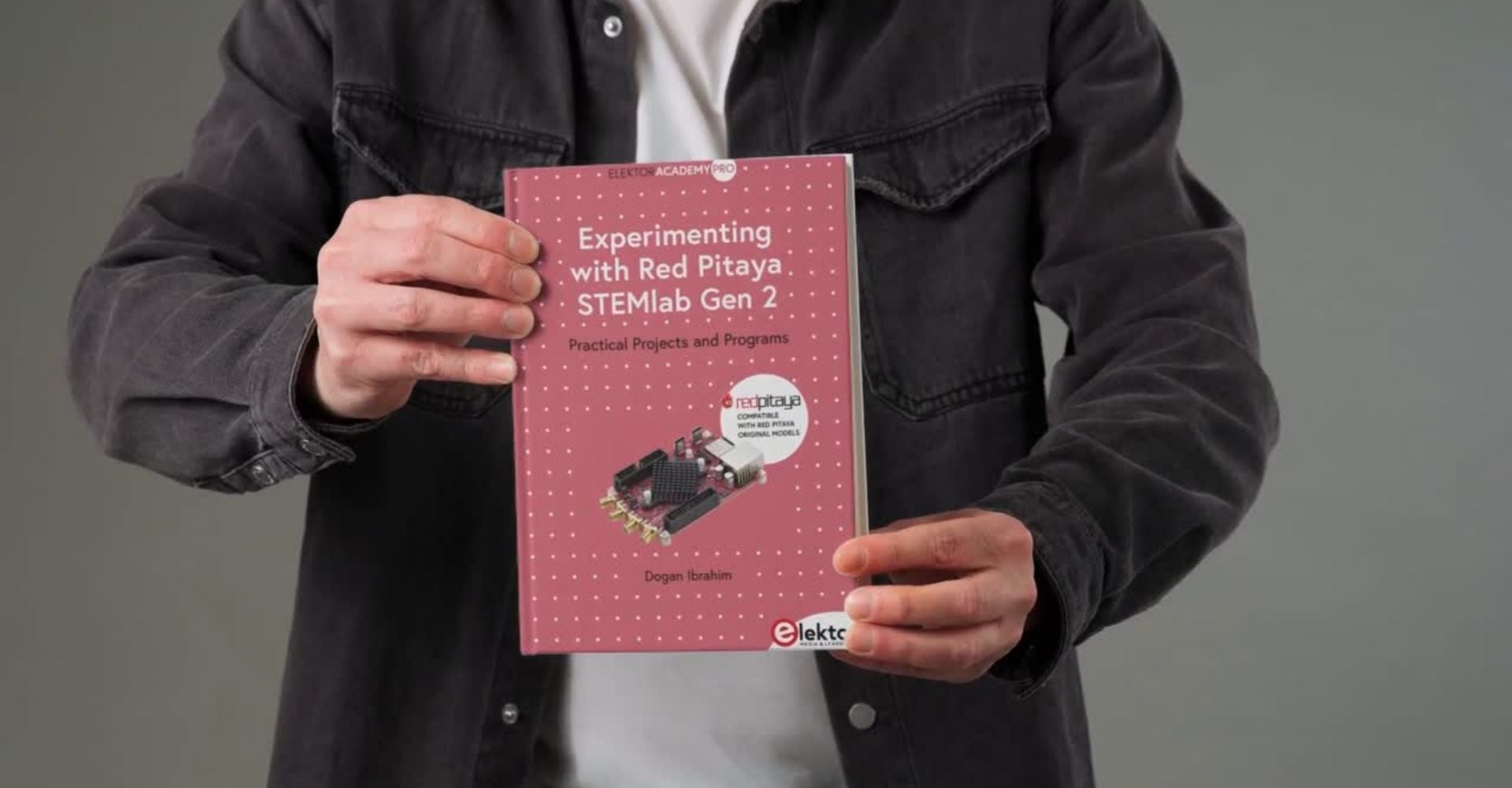
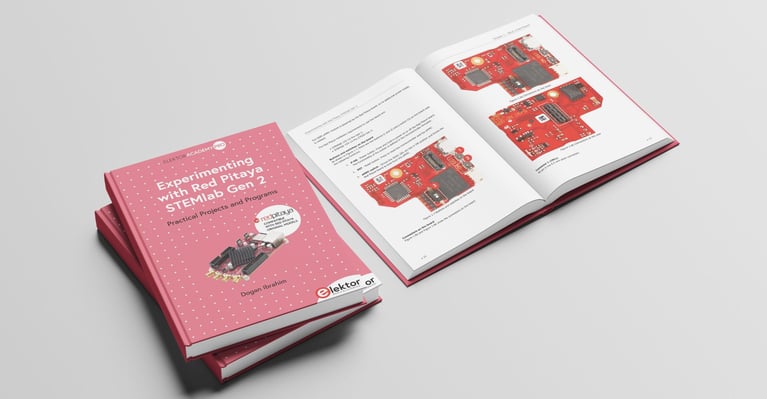
The new Elektor-published book Experimenting with Red Pitaya STEMlab Gen 2 focuses on what that shift enables in practice.
From Fixed Instruments to Reconfigurable Systems
At the core of the platform is a Zynq architecture, combining ARM processing with FPGA fabric. This is not just an implementation detail—it fundamentally changes how engineers interact with measurement systems.
Instead of configuring instruments, you can:
- Modify signal processing pipelines directly in FPGA
- Prototype custom measurement workflows
- Transition from testing to system design on the same hardware
The book treats the platform accordingly—not as a tool to operate, but as a system to extend.
Hands-On Engineering, Not Abstract Theory
The material is structured around practical interaction:
- Generate and observe real signals
- Modify parameters and inspect system response
- Progress toward FPGA-based processing and custom instrumentation
Python and Vivado are introduced where necessary, but always tied to real measurement or control tasks. The emphasis remains on closed-loop experimentation, not isolated examples.
Extending the Bench with a Single Platform
With 14-bit resolution at 125 MS/s, the Red Pitaya STEMlab 125-14 PRO Gen 2 covers a wide portion of typical lab instrumentation. More importantly, it removes the fixed-function constraint.
This allows engineers to:
- Replace multiple instruments with one configurable platform
- Build application-specific measurement setups
- Iterate faster between idea, implementation, and validation
For teams working across embedded systems, DSP, or photonics, this flexibility reduces both hardware overhead and development friction.
Continuity for Existing Users
For engineers already familiar with earlier Red Pitaya platforms or the original Elektor book, the new material builds directly on that foundation. The workflows remain consistent, while the Gen 2 hardware expands performance and system-level capabilities.
Why This Matters
The shift from predefined instruments to programmable measurement systems is already visible across research and industry. Platforms like Red Pitaya compress that transition into a single device.
This book captures that transition in a practical way: not by describing what the hardware can do, but by showing how engineers can use it to design, test, and iterate within one unified environment.
Read the Full Article
For the complete overview and details from Elektor, see the original publication:
→ https://www.elektormagazine.com/news/red-pitaya-stemlab-gen-2
FAQ
What is the Red Pitaya STEMlab Gen 2 platform?
The Red Pitaya STEMlab Gen 2 is a Zynq-based, software-defined test and measurement platform that combines FPGA processing with embedded Linux, enabling customizable instrumentation.
What does the Elektor book focus on?
The book Experimenting with Red Pitaya STEMlab Gen 2 focuses on hands-on workflows—signal generation, measurement, FPGA development, and building custom instruments using real hardware.
Is this book suitable for experienced engineers?
Yes. While accessible, the content moves quickly into FPGA-based processing, system-level thinking, and practical implementation using tools like Vivado and Python.
What makes Red Pitaya different from traditional lab instruments?
Unlike fixed-function instruments, Red Pitaya allows engineers to reconfigure signal processing and measurement pipelines directly in FPGA, effectively turning one device into multiple custom tools.
Do I need FPGA experience to use the platform?
Not initially. Basic experiments can be run without FPGA development, but deeper customization and performance optimization benefit from FPGA knowledge.
What hardware is recommended for following the book?
The Red Pitaya STEMlab 125-14 PRO Gen 2 is commonly used, offering 14-bit resolution and 125 MS/s sampling, suitable for a wide range of measurement and DSP applications.
Is the content compatible with older Red Pitaya boards?
Yes. Many concepts and workflows carry over from earlier generations, making the book useful for existing users as well.
About the Red Pitaya Team
The Red Pitaya Technical Editorial Team is a cross-functional group of technical communicators and product specialists. By synthesizing insights from our hardware developers and global research partners, we provide verified, high-value content that bridges the gap between open-source innovation and industrial-grade precision.
Our mission is to make advanced instrumentation accessible to engineers, researchers, and educators worldwide.

 October 20, 2026